

Legacy type systems are fundamentally flawed.
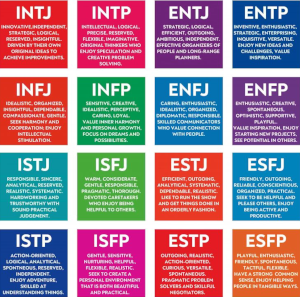
In the 1940s, the Myers-Briggs Type Indicator was devised. The first and most well-known personality type system, it introduced the idea of types. However, the MTBI and its variants, such as the Kiersey Temperament Sorter, are fundamentally flawed.
Because the MTBI employs either/or dichotomies (“are you extroverted, or introverted?”), it can’t accurately represent human qualities, which exist on a spectrum. That’s why it has been described as “totally meaningless,” and “the fad that won’t die.”
As for the other legacy personality type systems in use today, they’re not much better:
- The DISC specifies four styles of behavior that include dominance and submission. It describes degrees of independence in people, and not much else.
- The Enneagram of Personality comes from the world of esoteric spirituality. Based on the work of a very strange mystic, it’s complicated and confusing.
- The Minnesota Multiphasic Personality Inventory was originally used for diagnosing mental illness. It has been repurposed, but that’s what it’s good for.
Legacy assessment systems are very limited.
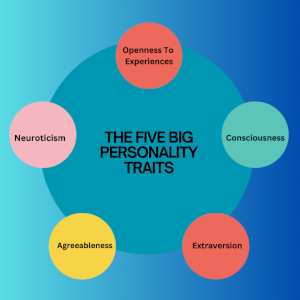
In the 1980s, psychologists began assessing personality not with types, but through traits. They identified five salient traits—Openness, Conscientiousness, Extraversion, Agreeableness, and Neuroticism—then measured them in people using surveys.
This idea is also flawed, because those traits reflect a person’s cultural conditioning more than their innate tendencies. As a result, assessment systems based on this Five Factor Model (FFM), identify someone’s superficial qualities, not their core character.
This makes FFM systems such as the NEO-PI, the 16PF, and the HEXACO useful only in limited ways. They’re used mainly to help large corporations answer simple hiring questions like, “Will this job applicant show up for work on time and follow instructions?”
FFM systems are “black boxes,” in that the people they’re used to evaluate can’t see how they work. With them, first you take a long survey and rate yourself on vague criteria like “I am interested in people,” then your responses are interpreted using methods unknown to you.
Why are FFM systems so limited and opaque? They’re products of research psychology, a notoriously unreliable field with a track record of generating ideas and programs that fail in the real world.
The Teska Type System™ has several advantages.

Now, in the 2020s, we have The Teska Type System™. Because its types reflect a million years of human evolution, it reveals a person’s core character. It doesn’t point to surface-level qualities, it describes someone’s deep-level nature.
The Teska Type System™ identifies who’s naturally good at what. Because it does, it works well for important tasks like team building. It’s not an aid to HR in filling low-agency jobs, it’s an interpersonal tool that helps leaders build high-performing teams.
The Teska Type System™ provides type descriptions that anyone can review. This way, someone can see which type resonates with them, then say, “That’s me! That’s my type.” It’s not a “black box,” it’s an open book that’s easy to understand.
The Teska Type System™ is based on research in anthropology, archaeology, endocrinology, and climatology. This interdisciplinary approach has shed new light on personality. It’s not the product of a psych study, it’s the result of broad-based inquiry.